Motorcycle shipping delays of two or more weeks almost always trace back to multi-hub consolidation — a model where brokers hold your bike at a regional warehouse until enough other motorcycles are ready to fill a trailer. Direct pickup-to-delivery dispatch eliminates this wait entirely by assigning a single carrier from your door to the destination without any intermediate stops or transfers.
Your motorcycle pickup went smoothly. Then two weeks passed. Then three. When you finally tracked down the broker, you heard something about a "hub" or a "consolidation point" — and your bike still wasn't moving. This is more common than you might think, and it almost always comes down to the same underlying logistics model.
What Is Multi-Hub Consolidation and Why Does It Cause Delays?
Multi-hub consolidation is a cost-saving approach used by some motorcycle shipping brokers. Instead of dispatching a carrier directly from your door to the destination, they route your bike through one or more regional warehouse hubs — essentially holding it until enough other motorcycles in the same region are ready to fill a trailer.
A motorcycle transport trailer typically holds between 6 and 10 bikes. If a broker has only two motorcycles ready on a Florida-to-California lane, they may hold both at a Tampa warehouse until they collect enough additional bookings to justify dispatching a truck. That process can take anywhere from a few days to several weeks depending on how active that lane is.
The broker's cost per bike drops when the trailer is full. Your wait time rises. Those two facts are directly connected.
How Can You Tell If a Broker Uses the Hub Model Before You Book?
Ask directly: "Will my motorcycle be picked up by the carrier that delivers it, or will it transfer at any intermediate facility?" A broker using the direct dispatch model will answer yes without hesitation. Evasive or vague answers ("it depends on routing") are a signal the hub model is in play.
Also look at the quote. Hub-model brokers tend to price 10–20% below market because they're competing on cost, not speed. If a quote looks unusually low for a cross-country motorcycle shipment, consolidation staging is often why.
What Does Direct Pickup-to-Delivery Actually Mean?
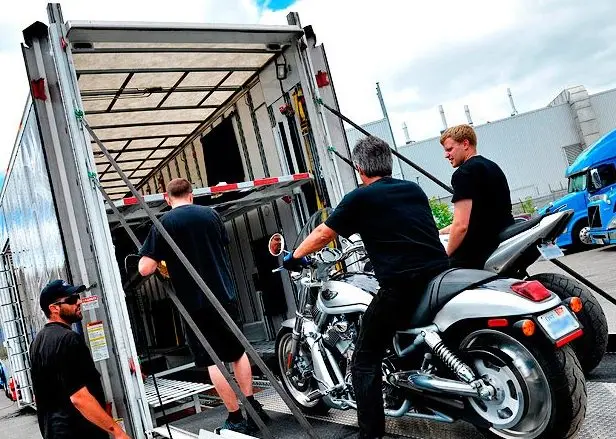
Direct dispatch means the carrier who picks up your motorcycle at your location is the same carrier who delivers it — with no intermediate warehouse stop. Your bike is secured on the trailer once, driven to the destination, and unloaded. Transit time reflects actual driving distance, not the unpredictable timeline of waiting for a partially-full trailer to fill up.
For motorcycle transport, direct dispatch matters more than it does for standard car shipping. Motorcycles are more vulnerable to scratching and tipping damage during the loading and unloading process. Every additional hub transfer is an additional exposure event.
Are There Routes Where Hub Models Are More Common?
Hub consolidation is most prevalent on secondary and rural routes — any lane that doesn't naturally generate enough motorcycle volume to fill a trailer quickly. Florida-to-Texas or California-to-Washington are high-volume enough that direct dispatch is the norm. Arizona-to-Ohio or Georgia-to-Minnesota? Volume drops significantly, and consolidation warehouses in Atlanta, Dallas, or Phoenix often become the de facto holding points.
If your origin or destination is off a major interstate corridor, ask your transport company specifically how they handle volume fluctuations on that lane before you commit.
What Should You Do If Your Bike Is Already Stuck at a Hub?
If your motorcycle is already in a warehouse and movement has stalled, you have a few options. First, get a specific commitment in writing — not "we're working on it" but a confirmed dispatch date with a carrier name and DOT number. Second, ask whether you can pay a lane surcharge to move your bike to a priority dispatch slot. Some brokers offer this; most won't advertise it unless you ask. Third, if the broker won't give you a date within 48 hours, understand your cancellation rights under the original contract — most motorcycle shipping agreements allow cancellation with a full refund if pickup hasn't been completed.
Frequently Asked Questions
How long should motorcycle shipping actually take? On direct dispatch, coast-to-coast motorcycle transport typically takes 7–14 days door-to-door. If you're past three weeks and the bike hasn't been delivered, consolidation staging is almost certainly the cause.
Does enclosed transport reduce the risk of hub delays? Generally yes — enclosed motorcycle transport is a premium service with lower volume, and carriers tend to run full trailers on scheduled routes rather than holding at hubs. It's also safer for the bike itself.
Can I ship a motorcycle directly without using a broker? Yes, but it requires finding a carrier directly on the FMCSA load board or through a carrier-only network, which takes research. Most customers find working with a broker who uses direct dispatch to be the easier path.